





























Looking for common manager interview questions to prep for your next interview?
You’ve led teams, shipped results, and now you’re interviewing for a management role. Now, it's time to pack that experience into job-winning manager interview answers.
Interviewers won’t just ask you about your resume: they’ll ask how you lead, how you think, and how you make results repeatable across a team.
This guide equips you with 25 common manager interview questions and structured, leadership‑level answers you can tailor to your own experience.
You’ll also learn the frameworks our coaching clients use to turn manager interviews into offers!
Before you dive in, grab your target job description and run it through our tools at the appropriate sections below. You’ll uncover the exact keywords and competencies to weave into your stories and craft a polished, ATS‑friendly resume.
Quick Navigation: Manager Interview Questions By Category
Leadership Style & Team Building Manager Interview Questions

- Situational: You'll do this by first describing the challenge you've faced
- Actionable: Explain your approach to solving the challenge
- Outcome-oriented: Quantify the impact with measurable results
Let's dive into specific examples below.
1. How would you describe your leadership style?
Why they ask: To see if your natural approach aligns with the company’s culture and the team’s needs.
Answer framework: Start with a one‑sentence label (e.g., “servant leader,” “situational coach,” “data‑driven decision maker”), then illustrate with a recent example: the context, what you did, and the result. Highlight how you flex your style to fit the individual or situation.
Example answer:
“I describe myself as a servant leader who prioritizes removing roadblocks so the team can shine. On my last product launch, our designers were bottlenecked by approvals. I re‑aligned stakeholders in a weekly working group, delegated sign‑offs to functional leads, and created a simple decision matrix. We cleared the backlog two weeks early and boosted on‑time delivery from 70 % to 92 %, and my team reported higher engagement in our pulse surveys.”
Tailoring tip: Use language directly from the job description (for example, “collaborative,” “metrics‑driven,” or “transformational”) to show alignment. If the role mentions a specific leadership model, connect your example to it.
2. How do you build trust with a new team?
Why they ask: Trust is foundational for retention and performance. They want to know your ramp‑up plan for a new group.
Answer framework: Explain the three stages you follow:
- Listen and learn
- Co‑create expectation
- Deliver quick wins.
Give a specific example with a timeline and team size.
Example answer:
“When I joined Acme as a sales manager, I spent the first two weeks in one‑on‑ones asking reps about their goals, obstacles, and how they wanted to be supported. Together, we agreed on clear weekly metrics and bi‑monthly win‑share meetings. I immediately tackled the biggest pain point by streamlining our CRM workflow, saving each rep ~3 hours per week. Because I listened first and delivered quick wins, our monthly NPS jumped from 36 to 62 within a quarter.”
Tailoring tip: Mention tools like surveys, listening tours, or workshops if relevant to the role. Quantify the impact of trust (lower attrition, higher engagement, improved output).
3. Tell me about a time you had to motivate a disengaged team.
Why they ask: To see if you can diagnose root causes and create motivation beyond surface‑level perks.
Answer framework: Describe the symptoms (declining KPIs, morale issues), your root‑cause analysis (surveys, metrics, interviews), and the intervention (clear vision, recognition programs, new processes). Then, finish with measurable outcomes.
Example answer:
“Our marketing team’s pipeline slowed dramatically last summer. I noticed cross‑functional friction and unclear ownership. I held a retro with each sub‑team, identified that our goals were misaligned, then rolled out OKRs connecting each project to our annual targets. We instituted a weekly ‘celebrate wins’ Slack thread and gave out monthly peer‑nominated recognition. Within two months, our MQL volume was up 35 %, and the team reported they felt more valued and focused in our quarterly engagement survey.”
Tailoring tip: Align your solution to the company’s stated values. If they emphasize data, show how you measured disengagement. If they emphasize innovation, show how you created space for creativity.
4. How do you assess the strengths and weaknesses of your team members?
Why they ask: Great leaders match people to tasks and invest in development. They want to know your toolkit for evaluating skills.
Answer framework: Outline your inputs (one‑on‑ones, performance metrics, 360‑degree feedback, self‑assessments) and how you synthesize them into development plans.
Example answer:
“I use a mix of quantitative and qualitative data. At my last company, I set monthly KPIs for each SDR, then used weekly coaching sessions to discuss roadblocks. Mid‑quarter, I ran a 360-degree feedback survey and had each person fill out a short self‑assessment. From that, I created individual development plans with specific goals (e.g., improve email response rate by 15 %, shadow two discovery calls per week). This approach helped one rep jump from 60 % of quota to 105 % within a quarter.”
Tailoring tip: If the role involves formal performance reviews, mention frameworks like 9‑box grids or OKRs. Tie the evaluation process to actual development outcomes.
Performance Management & Development Manager Interview Questions

5. How do you onboard a new hire?
Why they ask: Onboarding impacts retention and productivity. Hiring managers want to hear your plan for ramping people effectively.
Answer framework: Describe a structured onboarding roadmap with pre‑boarding communication, 30/60/90‑day goals, mentorship, and feedback checkpoints.
Example answer:
“I send a welcome email as soon as the offer is signed, outlining tools access, a buddy assignment, and pre‑reading. In week one, I pair the new hire with a buddy and schedule daily check‑ins. We co‑create 30/60/90‑day OKRs tied to team goals and meet every Friday to review progress. At Acme, this process reduced time‑to‑productivity by 40 % and cut first‑year attrition from 18 % to 7 %.”
Tailoring tip: Mention any onboarding documentation, training resources, or knowledge bases you’ve built, especially if the company is scaling quickly.
6. How do you handle an underperforming employee?
Why they ask: To confirm you handle performance issues proactively and fairly, rather than avoiding them or resorting to immediate termination.
Answer framework: Talk about data gathering, root‑cause analysis, coaching plans, documentation, and follow‑up. Show empathy and accountability.
Example answer:
“When an account executive missed quota for two straight quarters, I met with them to identify obstacles. We reviewed call recordings and discovered gaps in discovery and objection handling. I set up weekly coaching sessions, assigned a mentor, and set incremental targets. I documented expectations and progress in our HR system. Within three months, their close rate rose from 12 % to 20 %, and they exceeded quota by 8 %. If there’s no improvement despite support, I partner with HR on a performance improvement plan.”
Tailoring tip: Emphasize fairness and documentation. If your role includes compliance or union considerations, mention working with HR and following legal guidelines.
7. How do you develop high performers?
Why they ask: Great managers don’t just fix problems: they maximize strengths. Interviewers want to see if you retain top talent.
Answer framework: Explain how you identify high-potential employees and craft growth plans: stretch assignments, cross‑functional projects, mentorship, or promotion pathways.
Example answer:
“I use quarterly talent reviews to identify high performers, then have career conversations to understand their aspirations. At my last company, I gave one high‑potential marketer the chance to lead a cross‑functional ABM project. I coached them on stakeholder management and gave them autonomy over the plan. Their project generated $1.2 M in pipeline, and they earned a promotion to marketing manager six months later.”
Tailoring tip: Reference any leadership development programs, rotational assignments, or certifications you’ve championed. Quantify the impact on retention and succession.
8. How do you prioritize tasks and projects for your team?
Why they ask: Resource allocation is a key management skill. They want to know if you align work to business impact.
Answer framework: Discuss using frameworks like RICE (Reach, Impact, Confidence, Effort) or MoSCoW (Must, Should, Could, Won’t). Mention stakeholder input and clear communication.
Example answer:
“Our product team had 40 requests and capacity for 10. I partnered with product and engineering to score each using RICE: projected revenue impact, user reach, confidence, and effort. We picked the top 8, leaving a 20 % buffer for urgent items. I communicated the rationale to stakeholders and published a roadmap. This transparent prioritization increased satisfaction from customer success and reduced context switching for engineers by 50 %.”
Tailoring tip: If the company uses a specific framework (OKRs, Agile points), speak their language. Show how you manage incoming requests and set expectations.
9. How do you delegate effectively?
Why they ask: Delegation ensures efficiency and team growth. They want to see your process for assigning tasks and maintaining quality.
Answer framework: Describe matching tasks to skill levels, setting clear objectives, providing context, and following up without micromanaging.
Example answer:
“I believe delegation is about empowerment, not dumping. When leading a cross‑sell initiative, I assigned research to one analyst and asked a senior rep to develop messaging. I provided context on the strategic goal and key metrics. We set weekly check‑ins to remove blockers. The analyst uncovered a profitable niche, and the rep’s messaging led to $400K in new revenue. By delegating ownership, the team members felt invested and developed new skills.”
Tailoring tip: Describe how you adjust delegation based on experience levels. Use metrics (time saved, pipeline created) to prove results.
10. How do you handle remote or hybrid teams?
Why they ask: Remote and hybrid companies want reassurance that you can maintain engagement, productivity, and communication without face time.
Answer framework: Outline how you structure communication (weekly all‑hands, daily standups, asynchronous channels), set clear expectations, and foster culture virtually.
Example answer:
“My last team was 100 % distributed across four time zones. We used Monday.com for task tracking, Slack for asynchronous updates, and Zoom for weekly retros. I also held monthly virtual coffee chats and optional ‘deep dive’ sessions. Performance reviews and OKRs were documented transparently in Notion. As a result, we increased project completion rate by 15 %, and our eNPS climbed from 32 to 58 within six months.”
Tailoring tip: Mention any remote‑first practices (async videos, “focus hours,” virtual offsites). Show how you measure engagement remotely.
Communication & Feedback Manager Interview Questions

11. How do you communicate expectations and goals to your team?
Why they ask: Misaligned expectations lead to missed targets. Interviewers want to hear how you ensure clarity.
Answer framework: Speak to the mediums you use (kickoff decks, project briefs, written recaps) and how you confirm understanding. Mention using SMART goals or OKRs.
Example answer:
“I start projects with a kickoff meeting and a concise brief outlining objectives, timelines, and success metrics. I follow up with a written recap and assign owners in Asana. I ask each owner to summarize their understanding to ensure alignment. Throughout the project, we revisit the goals in weekly standups. This habit reduced deadline slippage by 20 % for my team.”
Tailoring tip: Name the project management or collaboration tools the company uses if you know them. Show how you adapt communication to different learning styles.
12. How do you provide constructive feedback?
Why they ask: Feedback is a core managerial skill. Interviewers want to know if you balance directness with empathy.
Answer framework: Use a structure like SBI (Situation–Behavior–Impact) or EEC (Example–Effect–Change). Explain the importance of timing, specificity, and follow‑up.
Example answer:
“I use the SBI framework for feedback. For example, when a PM missed multiple deadlines, I said, ‘In last week’s sprint planning (situation), you committed to four stories but only completed two (behavior). This delayed our launch and put stress on the QA team (impact). Let’s discuss why and adjust your commitments next sprint.’ Then we co‑created a plan to track progress daily. This approach improved on‑time delivery by 30 % over three sprints.”
Tailoring tip: Show that you deliver feedback privately (unless it’s recognition), focus on behaviors, and tie it to outcomes. Mention following up to support improvement.
13. How do you handle upward communication? For example, pushing back on your manager or executives?
Why they ask: Managers must influence up as well as down. They want to see if you can advocate for your team without burning bridges.
Answer framework: Describe preparing data, framing the conversation around business impact, and offering alternatives. Emphasize respect and timing.
Example answer:
“When leadership wanted to move up our release date by two weeks, I analyzed the impact: code coverage would drop to 68 %, and we risked an increase in bugs. I scheduled a meeting with the VP of product, brought the data, and proposed a staggered rollout for the must‑have features. I framed it around protecting customer trust. The VP agreed to the staggered plan. Our post‑launch bug rate stayed under 0.5 %, and we met the strategic deadline without sacrificing quality.”
Tailoring tip: Show that you respect the chain of command, but will advocate when necessary. Use metrics to support your perspective.
14. Describe a time you led a cross-functional project. How did you communicate across teams?
Why they ask: Leadership roles require collaboration beyond your immediate department. They want to see your ability to manage diverse stakeholders.
Answer framework: Explain the goal, stakeholders, communication cadence, and resolution of any misalignment. Emphasize transparency and shared metrics.
Example answer:
“I led a cross‑functional product launch involving engineering, marketing, sales, and support. I started with a RACI matrix to define roles, then set up a weekly 30‑minute sync with department leads. We used a shared dashboard tracking readiness across code, content, training, and support materials. When marketing requested last‑minute design changes, I facilitated a trade‑off discussion with engineering. By aligning on the shared goal — a seamless launch — we delivered on time and achieved a 15 % lift in quarter‑over‑quarter revenue.”
Tailoring tip: Use the company’s terminology (squad, pod, scrum). Show how you resolved conflicts and documented decisions.
15. How do you prepare for and conduct performance reviews?
Why they ask: Performance reviews influence morale, compensation, and development. They want to ensure you treat them seriously and fairly.
Answer framework: Discuss gathering data (self‑reviews, peer feedback, metrics), writing balanced narratives, calibrating ratings, and delivering the review with clear next steps.
Example answer:
“I prepare by collecting quantitative data (KPIs, quota attainment) and qualitative feedback from peers and stakeholders. I ask the employee to complete a self‑review focusing on achievements and challenges. I write a balanced summary with examples and align ratings with calibration guidelines. During the meeting, I review accomplishments, discuss gaps, and co‑create a development plan. At my last company, this approach increased satisfaction with our review process by 24 % in our annual survey.”
Tailoring tip: If the company uses a specific review cadence (bi‑annual, continuous), mention your experience. Show how you avoid recency bias and document agreements.
Conflict & Difficult Situations Manager Interview Questions

16. How do you handle conflict between team members?
Why they ask: To see if you address friction proactively and fairly.
Answer framework: Describe bringing parties together, facilitating dialogue, focusing on the issue (not personalities), and aligning on a solution.
Example answer:
“Two developers on my team clashed over code architecture. I met with them individually to understand their perspectives, then facilitated a joint discussion. We aligned on the requirements and decided to prototype both approaches, evaluating them against performance and maintainability criteria. The exercise defused tension and resulted in a hybrid solution that improved load times by 20 %. We also set a team guideline for future technical debates.”
Tailoring tip: Highlight neutrality and process. Show how you prevent conflicts from recurring (e.g., guidelines, communication norms).
17. Tell me about a time you had to make an unpopular decision.
Why they ask: Leadership includes making tough calls. They want to know how you balance stakeholders and communicate decisions.
Answer framework: Explain the context, alternatives considered, the decision, and how you communicated it. Share the long‑term outcome and what you learned.
Example answer:
“We had to cut costs by 15 % for our division. I analyzed discretionary spend and decided to freeze travel and cancel a popular offsite. I met with the team to explain our financial targets, the options considered, and why this was the most equitable solution. People were disappointed, but we hit our savings goal and avoided layoffs. I later surveyed the team and reinvested part of the savings into training budgets, which boosted morale.”
Tailoring tip: Show that you considered multiple solutions and communicated openly. If the decision was reversed later, share what changed.
18. Describe a high-stress situation and how you managed it.
Why they ask: They want to see resilience and calm under pressure.
Answer framework: Set the scene (tight deadline, crisis), explain your plan (prioritization, delegating, communication), and share the outcome.
Example answer:
“During a product launch, we found a critical payment bug three hours before release. I called an immediate standup, delegated bug triage to the engineers, and tasked support with drafting a customer communication. I updated leadership every 30 minutes. We delayed the launch by 12 hours, fixed the bug, and communicated proactively to customers. Although stressful, our clear roles and frequent updates kept everyone focused, and we successfully launched with zero incidents.”
Tailoring tip: Quantify results (bug count, downtime prevented). Show how you kept the team calm and aligned.
19. How do you handle feedback you disagree with?
Why they ask: Managers must accept feedback gracefully, even if it feels off‑base.
Answer framework: Talk about seeking to understand, asking clarifying questions, reflecting before reacting, and using criticism for growth.
Example answer:
“A peer once told me that my project updates were too detailed for leadership. Initially I felt defensive because I pride myself on transparency. I thanked them, asked for examples, and listened. After reflecting, I realized executives need concise summaries. I adjusted by sending a one‑page executive summary with bullet highlights, and the feedback stopped. I learned to tailor the depth of information to the audience.”
Tailoring tip: Choose feedback that ended up improving your leadership. Avoid complaining or blaming; instead, highlight humility and adaptation.
20. How do you ensure diversity, equity, and inclusion within your team?
Why they ask: Modern leaders must build inclusive teams. They want to see concrete actions, not just platitudes.
Answer framework: Explain how you build diverse pipelines, mitigate bias in interviews, create inclusive rituals, and measure belonging.
Example answer:
“As a support manager, I partnered with HR to diversify our candidate funnel by adding new job boards and engaging community groups. I trained interviewers on structured interviews and unconscious bias. We established a rotating meeting facilitator to ensure all voices were heard. I tracked promotion and retention data by demographic to spot gaps. Within 12 months, team diversity increased by 20 %, and our eNPS across underrepresented groups improved by 15 points.”
Tailoring tip: If the company has public DEI goals, reference them. Highlight personal learning (e.g., attending workshops) and share metrics.
Business & Vision Manager Interview Questions

21. How do you align your team’s work with company goals?
Why they ask: Misalignment wastes resources. Interviewers want to see if you translate top‑level objectives into team actions.
Answer framework: Discuss cascading OKRs, linking tasks to metrics, and sharing company context regularly.
Example answer:
“At GrowthCo, leadership set an annual goal of increasing enterprise revenue by 25 %. I cascaded this into our marketing OKRs: generate 300 enterprise MQLs and support $8M in pipeline. Each marketer’s projects (case study content, ABM programs, webinars) tied to those targets. We reviewed progress in our weekly meeting and adjusted tactics based on pipeline health. Our team drove $9.3M in enterprise pipeline, helping the company exceed its revenue target.”
Tailoring tip: Use language like OKRs, KPIs, or North Star metrics. Include a specific example of linking an individual’s task to a company‑level outcome.
22. How do you handle budget constraints?
Why they ask: Resources are finite. They want to know if you can prioritize and innovate under constraints.
Answer framework: Share a scenario where you had to cut costs or reallocate budget, the analysis you conducted, and the creative solution.
Example answer:
“Our training budget was reduced by 30 % mid‑year. Instead of canceling programs, I negotiated group discounts with vendors and shifted some content to internal subject‑matter experts. I also introduced peer‑led workshops and leveraged free webinars. We kept 90 % of our planned training sessions, maintained satisfaction scores above 4.5/5, and saved $75K.”
Tailoring tip: Emphasize negotiating, creative problem solving, and maintaining quality despite constraints.
23. Describe a time you used data to make a strategic decision.
Why they ask: Decisions should be evidence‑based. They want to see your analytical rigor.
Answer framework: Outline the problem, the data sources you analyzed, the insights you drew, and the decision made. Mention the outcome.
Example answer:
“Our customer success team was unsure which accounts to prioritize for upsell. I pulled product usage data, NPS scores, and renewal dates into a single dashboard. The analysis revealed that mid‑tier accounts with >80 % feature adoption and NPS > 7 had the highest expansion potential. We focused our efforts there, resulting in a 22 % uplift in upsell revenue vs. the prior quarter.”
Tailoring tip: Tie your data to the metrics the company cares about (ARR, churn, conversion). Mention any BI tools or SQL proficiency if relevant.
24. How do you build and communicate a vision for your team?
Why they ask: Leaders inspire. This question tests your ability to articulate a compelling future and rally people around it.
Answer framework: Describe how you gather input, craft a vision statement linked to company strategy, and reinforce it through storytelling and rituals.
Example answer:
“When I became head of support, churn was high and morale was low. I met with frontline reps to understand their frustrations and worked with leadership to define our north star: ‘Deliver support experiences so good our customers become our biggest advocates.’ I shared this vision in an all‑hands, painted a picture of what success would look like (CSAT > 95 %, same‑day resolution), and tied every OKR to it. We celebrated each incremental win in our Slack channel. Within six months, CSAT hit 94 % and churn dropped by 18 %.”
Tailoring tip: Use inspiring language but ground it in tangible metrics. Show how you reinforce the vision regularly (weekly meetings, dashboards, story sharing).
Self‑Reflection & Growth Manager Interview Questions

25. What is one leadership lesson you learned the hard way?
Why they ask: Interviewers want self‑aware managers who learn from missteps.
Answer framework: Pick a real mistake (avoid anything unethical or catastrophic), describe what you learned, and how you changed your behavior.
Example answer:
“Early in my career, I thought being a good manager meant having all the answers. On a software migration project, I made decisions without involving my team, which led to missed edge cases and late nights. After that, I learned to facilitate solutions rather than dictate them. Now, I lead with questions, invite dissenting opinions, and leverage the expertise of my team. This approach not only improves outcomes but also empowers my team to think critically and own results.”
Tailoring tip: Choose a lesson relevant to the role (communication, delegation, accountability). Emphasize what changed and the positive impact.
How to Prepare & Tailor Your Answers
1. Analyze the Job Description
Identify the top skills, must-haves, and keywords the role requires. You can do this manually or use ResyMatch.io, our free tool below to extract them instantly:
Scanning...

2. Create a Story Bank
Write down 6–8 multi‑purpose stories from your career that map to the job’s core requirements.
For example, a time you:
- Grew revenue
- Coached someone to success
- Resolved a conflict
- Executed under pressure
- Negotiated across teams
- Championed diversity.
Structure each story using our interview preparation system to nail your answers.
3. Practice & Iterate
Rehearse your answers aloud and use AI tools like ChatGPT Voice Mode to rehearse your answers.
Here's a video to walk you through the setup:
Use this setup for mock interviews and roleplay for real life!
4. Build a Targeted, ATS‑Friendly Resume
Your resume must match the role’s keywords and showcase your biggest wins. To create a polished, ATS‑friendly resume with role‑specific sections, use our free ResyBuild tool here:

Free Job-Winning Resume Templates, Build Yours In No Time.
Choose a resume template below to get started:
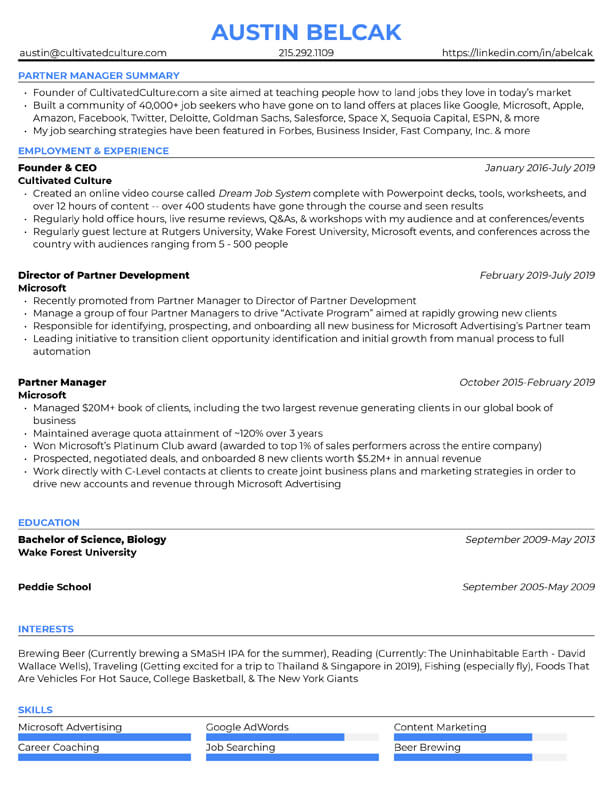
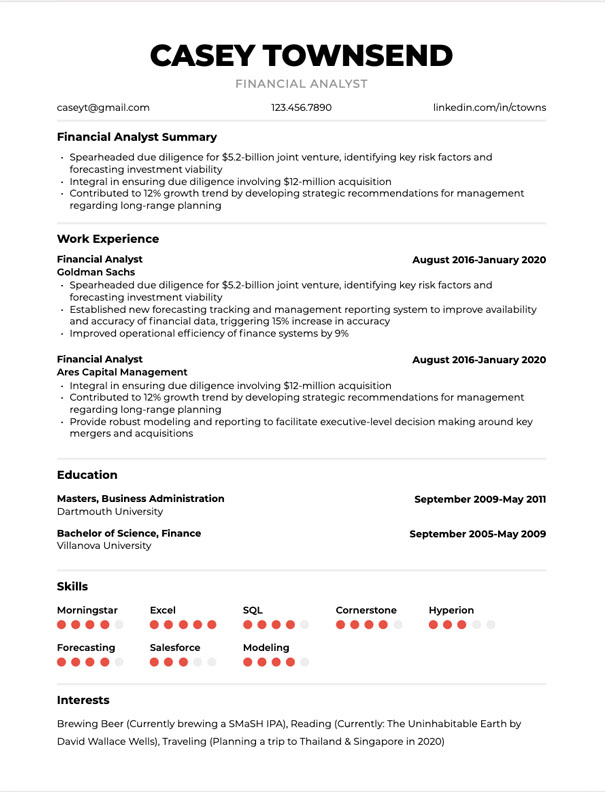
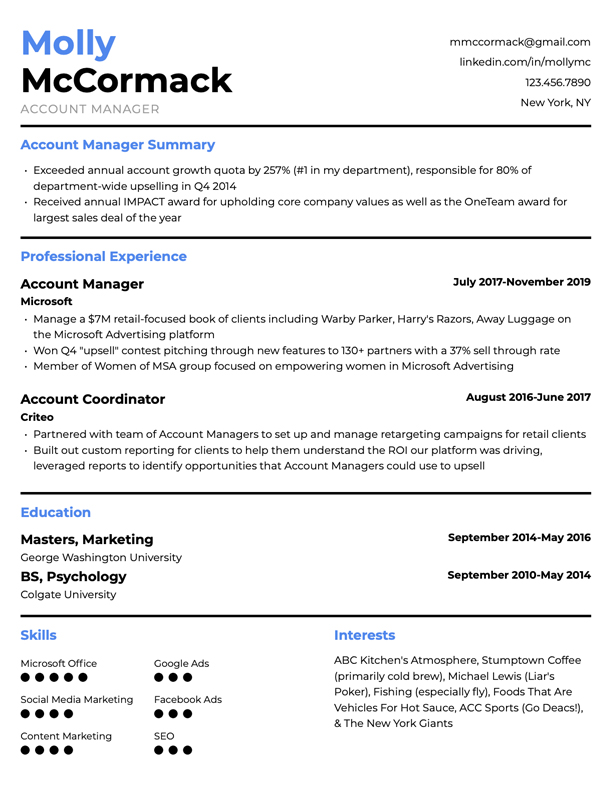
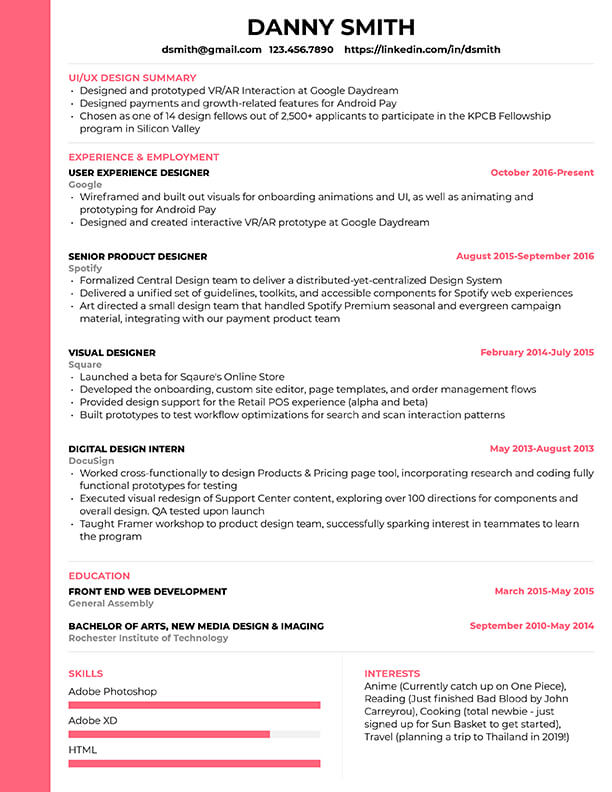
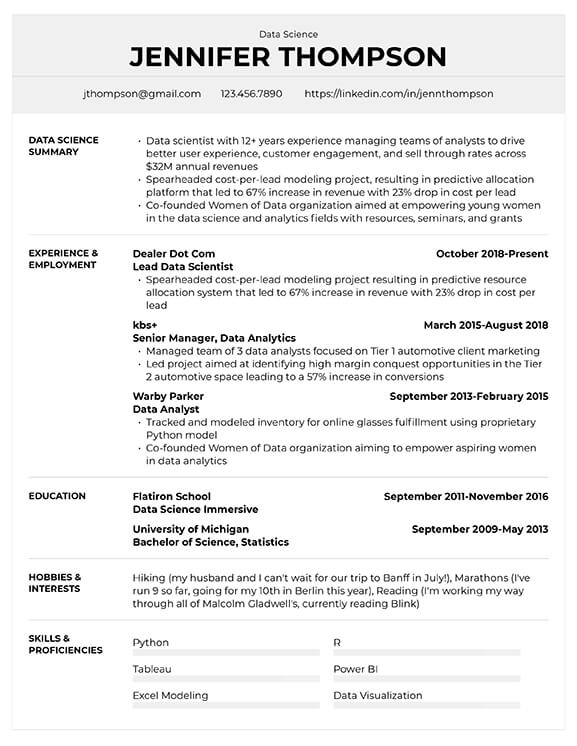
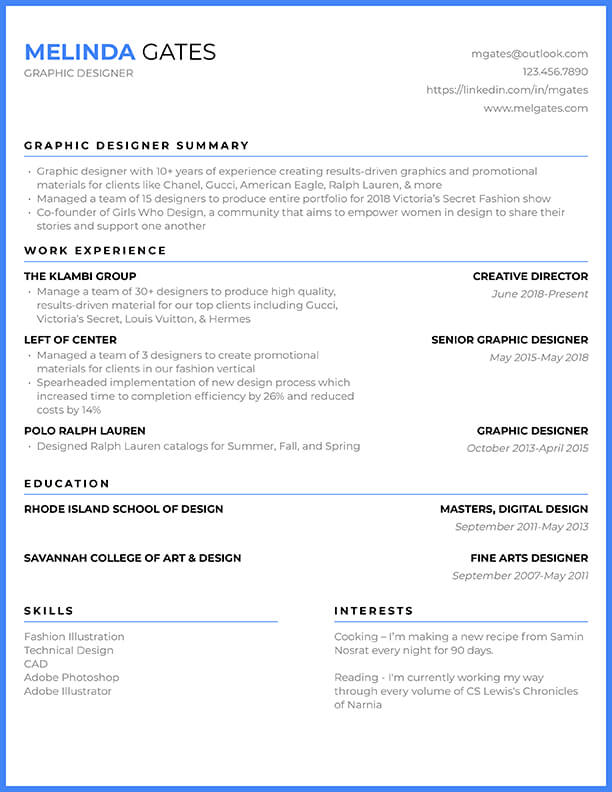
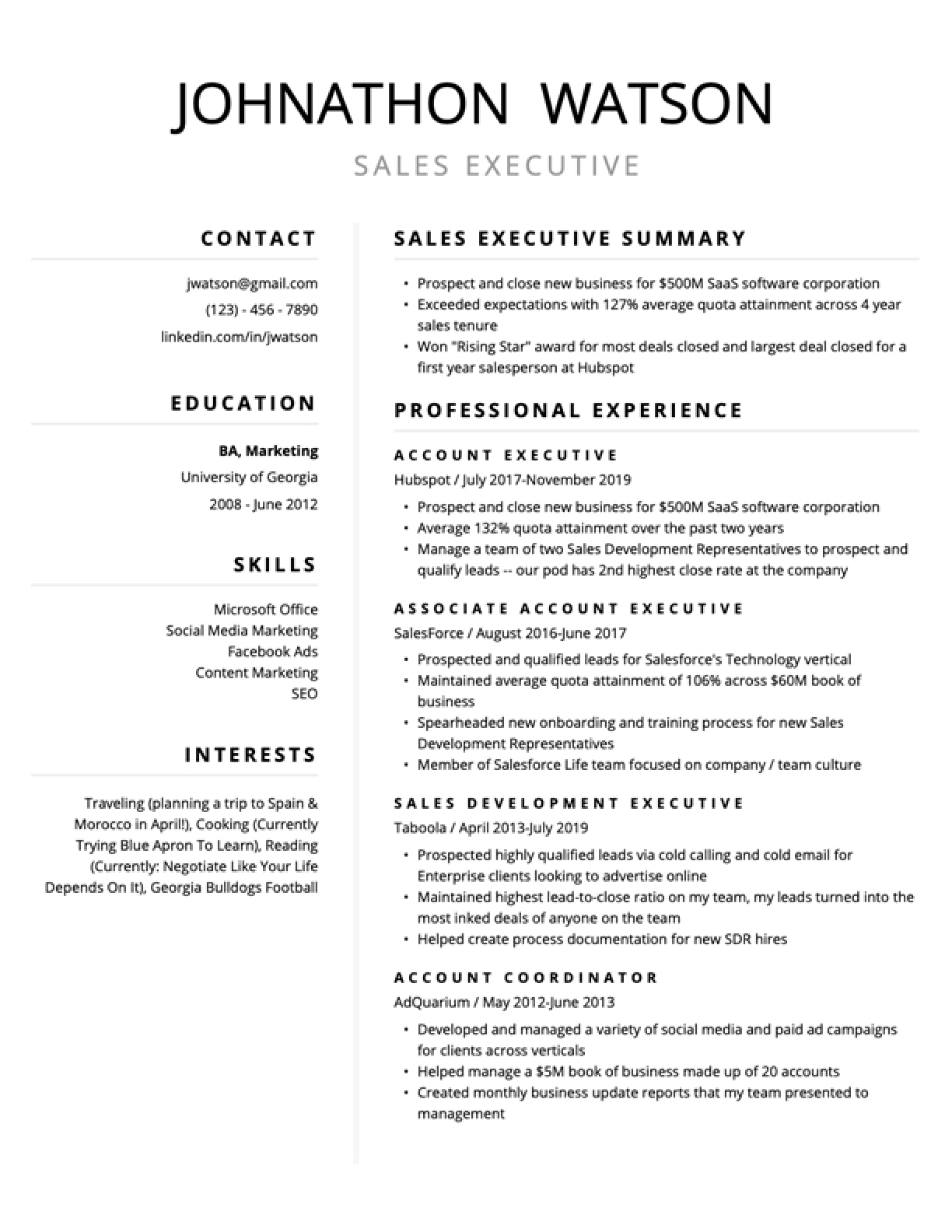
Once you’ve drafted your resume, scan it with ResyMatch again to ensure it aligns with the job posting. A targeted resume increases your chances of landing the interview in the first place.
How to Craft Compelling Resume Bullets
- Start with a strong verb. Use high‑impact verbs that align with the role: orchestrated, transformed, negotiated, optimized, spearheaded, accelerated, etc.
- Add a quantifiable metric. Specify the scope (team size, budget), the lift (percentage increase, cost savings), or the absolute number (revenue, number of projects).
- Tie to a business outcome. Explain how the action benefited the organization: improved retention, increased pipeline, reduced waste, accelerated launches, etc.
- Mirror the job description’s language. Use the same terminology (e.g., OKRs, Agile, SaaS, P&L) so Applicant Tracking Systems and recruiters see alignment immediately.
- Keep it concise. One bullet = one idea. Aim for 10–14 words. Place the metric at the beginning or end for emphasis.
Example transformation: Instead of “Managed customer onboarding”, write “Reduced new client ramp time 35 % by redesigning onboarding journey and training”.
Need help tightening your bullets? Use our analyzer below to get instant suggestions for stronger verbs, tighter phrasing, and better metrics:
Final Thoughts On Manager Interview Questions